পোস্টগুলি

Learn-English লেবেল থাকা পোস্টগুলি দেখানো হচ্ছে

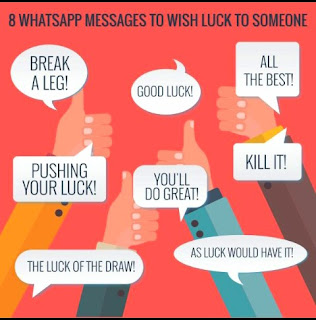
8 WhatsApp messages to wish someone luck
ছবি
8 WhatsApp messages to wish someone luck: 1. Good luck (সৌভাগ্য) - used to express wishes for success. (কোনো ব্যক্তির সাফল্যের জন্য প্রাণঢালা শুভেচ্ছা!) Example: Good luck with your exams! 2. All the best (শুভকামনা, যেনো সব ভালো হোক) Example: All the best for your trip! 3. Break a leg (খুব ভালো করা, ভাগ্য তোমার সাথে আছে) Example: You have practiced a lot! Break a leg! 4. Kill it! (অনেক ভালো করা) - wishing someone to do something extremely well Example: The audience went mad after his performance! He killed it! 5. You'll do great (আপনি অনেক ভালো করবেন) - When somebody is about to do something important, you could say this to motivate them. (যখন কেউ কিছু এম করতে যায় যেটা তার জন্য অনেক গুরুত্বপূর্ণ, তাদেরকে উৎসাহিত করতে এবং তাদের মধ্যে আস্থা বাড়ানোর জন্য,আপনি বলতে পারেন - You'll do great) Example: Don't worry, you'll do great! Other terms for luck: 1.'Pushing your luck': When you have good luck or a good situation, but you try too har...
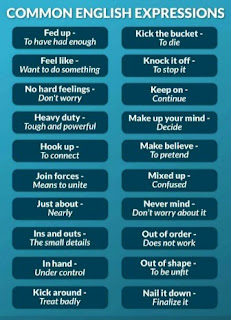
Common English expressions

ছবি
Common English expressions: 1. Fed up - this means, to have had enough(হয়রান) 2. Feel like - this means, want to do something(কিছু একটা করতে চাই) 3. No hard feelings - don't worry(চিন্তা করোনা) 4. Heavy duty - tough and powerful(শক্ত এবং শক্তিশালী) 5. Hook up - to connect(সংযোগ করা) 6. Join forces - means to unite(ঐক্য মানে) 7. just what the doctor ordered - means what you need(তুমি কি চাও) 8. Just about - nearly(প্রায়) 9. Ins and outs - the small details(ছোট বিবরণ) 10. In hand - under control(নিয়ন্ত্রণে) 11. Kick around - treat badly(খারাপ ব্যবহার) 12. Kick the bucket - to die(মরতে) 13. Knock it off - to stop it(এটা থামাতে) 14. Know-it-all - means, over confident(বেশি আত্মবিশ্বাসী) 15. Keep on - continue(অবিরত) 16. In less than no time - immediately(অবিলম্বে) 17. Long face - sad(দু: খিত) 18. Means business - serious(গম্ভীর) 19. Make up your mind - decide(সিদ্ধান্ত নেন) 20. Make off with - to steal(চুরি করা) 21. Make believe - to pret...

IELTS Writing এ কি থাকে, সেই বিষয়ে একটু আলোচনা করি,

Writing টিপস যেহেতু আপনি IELTS Writing এক্সাম দেওয়ার জন্য প্রস্তুতি নিচ্ছেন সেহেতু আপনাকে যেকোন টপিক্স নিয়ে লেখার অভ্যাস তৈরি করতে হবে । তাই বলে কি আপনাকে সব বিষয় মুখস্ত করতে হবে! তা নয়, আপ...

IELTS Speaking টিপস

Speaking টিপস IELTS Speaking টেস্টে কিছু টিপস ফলো করলে আমরা সহজেই ভাল স্কোর করতে পারি। চলেন বেসিক কিছু টিপস জানার চেষ্টা করি । IELTS Speaking টেস্টের দিন বাসা থেকে যদি শুরু করি, তাহলে যে কাজগুলো করতে হবে Be ...

IELTS ভোকাবুলারি A,B,C

ভোকাবুলারি A,B,C Aurora(অরোরা) - মেরুপ্রভা Anchor (এ্যা ঙ্কর) - নোঙ্গর Antimony (এ্যান্টিমোনি) - সুরমা Arsenic (আর্সেনিক) - সেঁকোবিষ Admire (এ্যাডমায়ার) - প্রসংসা করা Allot (এ্যালট) - বরাদ্দ করা Astral(এ্যাস্ট্রাল) - তারকাসন্ধী...

IELTS ভোকাবুলারি D,E,F

ভোকাবুলারি D,E,F Dynasty(ডিন্যাসটি)- রাজবংশ Dogma (ডগমা) - মতবাদ Divine(ডিভাইন) - স্বর্গীয় Dowry(ডাউরি) - পন Drench(ড্রেঞ্চ) - ভিজানো Densorotinous(ডেন্সোরোটিনাস) - আক্কেল দাঁত Dwell(ডোয়েল) - বাস করা Dispute (ডিসপিউট) - ঝগড়া করা Danger (ডেনজার) - ব...

IELTS ভোকাবুলারি G,H,I

ভোকাবুলারি G,H,I Garland (গারল্যান্ড) - ফুলের মালা Gnat (ন্যাট) - কীট Gruel (গ্রুয়েল) - ভাতের ফেন Glamour (গামার) - সোন্দর্য Gossip (গসিপ) - গল্প করা Gnarled (নার্ল্ড) - বাঁকানো Goblet (গবলেট) - হাতল ছাড়া বড় এক ধরনের গাস Grotto (গ্রোটো) - গুহা...

IELTS ভোকাবুলারি J,K,L

ভোকাবুলারি J,K,L Juvenile (জুভেনাইল) - অল্পবয়সী Jot (জট) - তাড়াতাড়ি লেখা Jockey (জোকি) - ঘোড়সওয়ার Jaw (জও) - চোয়াল Knob (নব) - হাতল Knot (নট) - জট Knock (নক) - টোকা দেওয়া Kinsfolk (কিনসফোক) – আত্ত্বীয়  Lap (ল্যাপ) - কোল Layer (লেয়ার) - স্তর Larva (লার্ভা) - স...

How to express indifference?

How to express indifference? Sometimes you may have no particular interest or concern about something and you want to express indifference during a conversation. Here are some expressions you can use: Expressing indifference So what?, Who cares!, I don’t care!, It’s all the same to me., I have no preference., I suppose so., I don’t mind. It doesn't matter to me, Whatever (you want)., Whatever you do?, I don’t mind., It’s your decision., Who knows!, Why should I care?, It makes no difference to me.,

Tips for Learning English with Interactive Websites

Tips for Learning English with Interactive Websites     Know your level. If the lesson is too easy, you’ll be bored. If it’s too hard, you won’t learn. So know your level and be honest!     Know how you learn best. Find a website that will help you learn through your favorite learning style.     Use a computer or phone with a microphone. Many of these websites and apps have activities where you can practice speaking. You’ll need a microphone for that.     Find topics that interest you. When you use topics that you like, you’ll want to learn and listen or read!     Schedule a time each day to study. You need to practice often and regularly to get better. Schedule a set time each day to study English, like while you have breakfast or take the train to work.     Don’t forget to go offline as well! Even if you learn a lot with these websites, don’t forget to practice with real people ...

Talking about favorite things

Talking about favorite things When you talk about your favorite things you talk about the best liked or most enjoyed things. Examples: "What's your favorite color?" "Green." Asking about favorite things: What's your favorite sport?, What sport do you like best?, What sport do you like most?, What kind of sport do you like best?, Who's your favorite football player?, Responding: My favorite sport is football. I like football best. I like football most. My favorite football player is Ronaldo. Things to remember: "Fav ou rite" is British spelling. "Fav o rite" is American spelling.

What is the difference between possibility and probability?

What is the difference between possibility and probability? Possibility  is when there is a chance that something may happen or be true while  probability  is the likelihood of something happening or being true: Example : "Until yesterday, the project was just a possibility , but now it has become a real  probability ." It is likely that it will happen. Expressing Possibility My grandmother  may  travel alone. May be  she will make the trip alone. Perhaps  she will visit London. Possibly , she will go by plane. It's possible  that someone will meet her at the airport. She  might  buy some presents for the family before she goes. I suppose she might  spend a lot of money on the presents. There's a chance  she'll like the city. She will take an umbrella as it  could rain heavily there.. Expressing impossibility No, it's  impossible  to repair that old Chevrolet. Even a good mechanic  can'...

Apologizing

Apologizing To apologize is to tell someone that you are sorry for having done something that has caused him inconvenience or unhappiness: Examples :  I must apologize to Isabel for my late arrival.  I'd like to apologize for my trouble making. Trains may be subject to delay on the northern line. We apologize for any inconvenience caused. Here are some expressions you can use to make and respond to apologies Making apologies: I do apologize for... I must apologize for... I apologize for... I'd like to apologize for... I am so sorry for... I shouldn't have... It's all my fault. I'm ashamed of... Please, forgive me for... Excuse me for ... I'm terribly sorry for... Pardon me for this... Please, forgive me for my.... Please, accept my apologies for... Accepting apologies: That's all right. Never mind. Don't apologize. It doesn't matter. Don't worry about it. Don't mention it. That's OK. I quite understand. You ...

Agreement, partial agreement and disagreement

Agreement, partial agreement and disagreement The way people agree or disagree in an argument or discussion varies in different languages. Agreement: It is worthwhile saying that silence is not understood as agreement. If you agree with an opinion or an idea, you are expected to say so. Expressions There is no doubt about it that... I completely / absolutely agree with you. I agree with you entirely. I totally agree with you.  I simply must agree with that.  I am of the same opinion.  I am of the same opinion.  That’s exactly what I think. Disagreement: Expressing disagreement is always respected as honest, and sometimes as courageous. Expressions I don't agree with you. I’m sorry, but I disagree.  I'm afraid, I can't agree with you.  The problem is that...  I (very much) doubt whether...  This is in complete contradiction to...  With all due respect,… I am of a different opinion because ...  I c...

Making and responding to a request

Making and responding to a request It's important to be polite when you ask for something. You can make a request by using: can you ...? could you ...? will you ...? would you mind ...? Here are some examples of how to make a request.. Can you  Will you  Could you possibly open the door for me, please? would you mind opening the door for me ? Making Request: Can you show me your photo album, please? Will you lend me your book, please? Could you possibly show me the way to the post office, please? Would you help me with this exercise, please? Would you mind lending me your pen, please? Responding to request: Sure here you are. Okey. No, I'm sorry I need it I'm afraid I can't. Things to remember about making a request: 1. "Would you mind..." is followed by a gerund (verb+ing) Example:"Would you mind lend ing  me your book? " 2. The response to the following request: A: "Would you mind giving me your book? " is ei...

What is the difference between possibility and probability?

What is the difference between possibility and probability? Possibility  is when there is a chance that something may happen or be true while  probability  is the likelihood of something happening or being true: Example : "Until yesterday, the project was just a possibility , but now it has become a real  probability ." It is likely that it will happen. Expressing Possibility My grandmother  may  travel alone. May be  she will make the trip alone. Perhaps  she will visit London. Possibly , she will go by plane. It's possible  that someone will meet her at the airport. She  might  buy some presents for the family before she goes. I suppose she might  spend a lot of money on the presents. There's a chance  she'll like the city. She will take an umbrella as it  could rain heavily there.. Expressing impossibility No, it's  impossible  to repair that old Chevrolet. Even a good mechanic  can'...

English Greetings

First impressions are important, so here's a guide to using the right expression. Greetings Two friends meeting Friends often say "Hi" to each other. Then they often ask a general question, such as "How are you?" or "How are things?" or "How's life?" The reply to this question is normally positive. "Fine thanks, and you?" "Fine thanks, what about yourself?" "Not bad." Or "Can't complain." Greeting people you don't know You can use "Hello" with people you don't know, but a more formal greeting is "Good morning / afternoon / evening." The other person normally replies with the same greeting as you have used and then makes polite conversation, such as "How was your trip?" or "Did you find our office easily?" Introducing yourself At an informal party "Hello, I'm Maria." Or "Hello, my name's Maria." The reply co...

Saying how happy Or Sad you are

Here are some of the ways you can express your feelings of happiness and sadness in English. Saying how happy you are You can be… – ( absolutely )  delighted –  thrilled to bits –  over the moon –  really pleased –  so happy "She was absolutely delighted with her present!" "Dave was thrilled to bits with his new computer." "Jenny's over the moon with her promotion." Or you can say… – I couldn't be happier. – That is fantastic / wonderful / great / marvellous! When you hear good news you can say: –  What great / wonderful / fantastic news! –  We've been waiting so long for this (moment). –  Thank God! / Thank God for that! (British English speakers tend not to be particularly religious) Pronunciation tip Stress the adverbs and adjectives for greater emphasis: – I'm  really  pleased. – What  great  news! Saying how sad you a...

Giving or Receiving Present in English

What can you say to give and receive presents in English? British people generally open presents in front of the people who have given them, and at events like Christmas, families will open their presents together. Here are some useful phrases for giving and receiving presents (along with what to say if you don't like the present!) When you are giving a present to someone you know well This is for you. I thought you might like this for Christmas / your birthday … It's only something small, but I hope you like it. I thought this might go well with your (new dress / Prada bag..) I wasn't sure what to get you but I hope you like it. (If you don't like it, you can always change it.) Hold out your hands

You could have + (past participle)

You could have + (past participle) Using 'could have' you are speaking about something that was, should be or would be. You are stating that they had other options that could have been chosen. Here are some examples: " You could have completed it sooner. " " You could have blown your chance. " " You could have done better on your exam. " " You could have given me more time to get ready. " " You could have heard that from someone else. " " You could have sent that package first class. " " You could have slept in a little longer. " " You could have written him a letter. " " You could have thought of something to do. " " You could have upset her by saying that. "