পোস্টগুলি

Learn-engilish লেবেল থাকা পোস্টগুলি দেখানো হচ্ছে

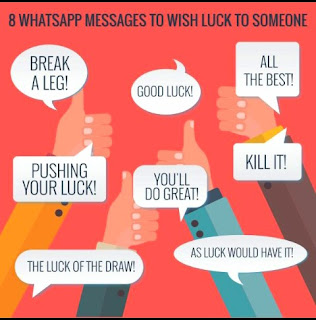
8 WhatsApp messages to wish someone luck
ছবি
8 WhatsApp messages to wish someone luck: 1. Good luck (সৌভাগ্য) - used to express wishes for success. (কোনো ব্যক্তির সাফল্যের জন্য প্রাণঢালা শুভেচ্ছা!) Example: Good luck with your exams! 2. All the best (শুভকামনা, যেনো সব ভালো হোক) Example: All the best for your trip! 3. Break a leg (খুব ভালো করা, ভাগ্য তোমার সাথে আছে) Example: You have practiced a lot! Break a leg! 4. Kill it! (অনেক ভালো করা) - wishing someone to do something extremely well Example: The audience went mad after his performance! He killed it! 5. You'll do great (আপনি অনেক ভালো করবেন) - When somebody is about to do something important, you could say this to motivate them. (যখন কেউ কিছু এম করতে যায় যেটা তার জন্য অনেক গুরুত্বপূর্ণ, তাদেরকে উৎসাহিত করতে এবং তাদের মধ্যে আস্থা বাড়ানোর জন্য,আপনি বলতে পারেন - You'll do great) Example: Don't worry, you'll do great! Other terms for luck: 1.'Pushing your luck': When you have good luck or a good situation, but you try too har...

Common English expressions

ছবি
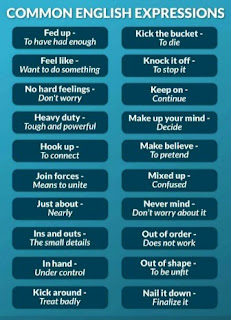
Common English expressions: 1. Fed up - this means, to have had enough(হয়রান) 2. Feel like - this means, want to do something(কিছু একটা করতে চাই) 3. No hard feelings - don't worry(চিন্তা করোনা) 4. Heavy duty - tough and powerful(শক্ত এবং শক্তিশালী) 5. Hook up - to connect(সংযোগ করা) 6. Join forces - means to unite(ঐক্য মানে) 7. just what the doctor ordered - means what you need(তুমি কি চাও) 8. Just about - nearly(প্রায়) 9. Ins and outs - the small details(ছোট বিবরণ) 10. In hand - under control(নিয়ন্ত্রণে) 11. Kick around - treat badly(খারাপ ব্যবহার) 12. Kick the bucket - to die(মরতে) 13. Knock it off - to stop it(এটা থামাতে) 14. Know-it-all - means, over confident(বেশি আত্মবিশ্বাসী) 15. Keep on - continue(অবিরত) 16. In less than no time - immediately(অবিলম্বে) 17. Long face - sad(দু: খিত) 18. Means business - serious(গম্ভীর) 19. Make up your mind - decide(সিদ্ধান্ত নেন) 20. Make off with - to steal(চুরি করা) 21. Make believe - to pret...

Expressing Frustration হতাশা প্রকাশ এর ১৩ নিয়ম

ছবি
Expressing Frustration(হতাশা প্রকাশ): 1. I can't stand   noun/gerund E.g. I can't stand stupid people. 2. I can't bear   noun/gerund E.g. I can't bear moonless nights. 3. I can't put up with   noun/gerund E.g. I can't put up with her. She's really annoying. 4. noun/gerund annoys me E.g. He annoys me. 5. noun/gerund bugs me E.g. My niece bugs me. 6. noun/gerund gets on my nerves E.g. The sound of my alarm clock gets on my nerves. 7. noun/gerund pisses me off (slang) E.g. People who show off all the time, piss me off. 8. I can't stand it when   sentence E.g. I can't stand it when people are dishonest. 9. I can't bear it when... E.g. I can't bear it when my feet are cold. 10. It annoys me when... E.g. It annoys me when my roommate leave the lights on. 11. It bugs me when... E.g. It bugs me when my phone runs out of battery. 12. It gets on my nerves when... E.g. It gets on my nerves when someone does not com...

IELTS Writing এ কি থাকে, সেই বিষয়ে একটু আলোচনা করি,

Writing টিপস যেহেতু আপনি IELTS Writing এক্সাম দেওয়ার জন্য প্রস্তুতি নিচ্ছেন সেহেতু আপনাকে যেকোন টপিক্স নিয়ে লেখার অভ্যাস তৈরি করতে হবে । তাই বলে কি আপনাকে সব বিষয় মুখস্ত করতে হবে! তা নয়, আপ...

IELTS Reading সেকশনটি কেন রাখা হয়েছে?

Reading টিপস IELTS Reading সেকশনটি কেন রাখা হয়েছে? IELTS Reading সেকশনের মাধ্যমে জানা যায় যে আপনি একটি আর্টিকেল পড়ে আপনি বুঝতে পারছেন কি না?পরীক্ষায় কোন তথ্য একটি নির্দিষ্ট সময়ের মধ্যে খুজেঁ বের করত...

It's too bad that

It's too bad that Too bad' means regrettable or unfortunate.  When using it in a sentence you are expressing a concern or regret for what has taken place.  The topic being discussed could have happened to you, the person you are talking to, or someone or something else. Here are some examples: " It's too bad that she lost her job. " " It's too bad that you have to go. " " It's too bad that I found out about it. " " It's too bad we will not be there on time. " " It's too bad that tickets are all gone to that concert. " " It's too bad that it is supposed to rain. " " It's too bad that she got hurt. " " It's too bad that my work has to lay off people. " " It's too bad that you do not understand. "

Why don't we + (verb)

Why don't we + (verb) Don't' is a contraction of 'do not.' When using 'why' you are asking a question that involves yourself and the person you are talking to. Here are some examples: " Why don't we go bowling tonight? " " Why don't we pick some fresh flowers? " " Why don't we play a game of chess? " " Why don't we save more money? " " Why don't we remember this place? " " Why don't we test this before using it? " " Why don't we try and do it again? " " Why don't we post our results online? " " Why don't we gather more firewood? " " Why don't we earn more money? "

I've heard that + (subject + verb)

I've heard that + (subject + verb) You are letting someone know that you are aware of something or that you have been informed of something that is taking place. This could be something that has already happened or something happening in the near future. 'I've' is a contraction of the words 'I have.' Here are some examples: " I've heard that you got a new job. " " I've heard that you want to leave your job. " " I've heard that you got a new car. " " I've heard that you like to jog. " " I've heard that you fix computers. " " I've heard that you've never been to Canada. " " I've heard that you like to shop. " " I've heard that you and your boss don't get along. " " I've heard that there is no school next week. " " I've heard that your wife is a yoga instructor. "

Making Plans in English

Making Plans in English We use the  present continuous  tense to talk about things that we are presently considering. I'm thinking of going  to … We're planning to  go to… He's hoping to  go to… I'm toying with  /  playing with  the idea of… When your plans are all arranged You can  use the present perfect tense to announce your plans: We've decided to  go to Greece. We've settled on  Spain, after all. They've opted for  a camping holiday in France. We've booked  a weekend in a boutique hotel in Paris. Or  use the going to future  to talk about your intentions: We're going to  (go to) the Algarve for two weeks in July. She's going to  stay in a B&B in the Lakes with some work mates. Note: if "going to" is followed by the verb "go to", you can omit "go to". We're going to go to Paris = We're going to go to Paris. Or use  will  to talk about...

English Conversation Tips

English Conversation Tips In a controlled environment (i.e. a classroom) speaking English with others is relatively easy, as you're probably practising particular expressions or vocabulary. But in the outside world, conversations can be a lot more unpredictable and things can go wrong in conversations. Maybe you don't understand the other person – or maybe they don't understand you. Maybe you're talking about a difficult subject with technical vocabulary, or maybe the other person uses a lot of slang or English idioms that you don't understand. Here are some tips and strategies for when there are communication problems. You don't know the word Sometimes we forget the right word, or we realise as we're speaking that we don't know the word we need. We can also forget the word if we are under pressure, such as in an exam. But the important thing is to keep going – don't let the conversation stop! If you don't know the word, try to say it in ano...

Talking About News in English

Talking About News in English We often talk and comment about the news in conversation with other people. Here are some English phrases you can use to refer to the news and to give your opinion about how it's reported. Introducing the subject Have you seen the story about…? Have you heard about the guy who…? Did you read the story of…? I've just read about… The paper's reporting a story about… Commenting on a news item you're reading Wait til you hear this! I can't believe this… You'll never believe it, but… Headlines and announcements In both newspapers and on TV news, headlines in English are frequently in a present tense. This is because we consider the news to be happening almost now. "Man dies in fire." (Newspaper heading.) "A man has died in a house fire caused by a faulty gas oven." (Announcement on TV news.) When we comment on the news, we also often use a present tense, such as the present perfect. They've just ...

Taking About Holiday

Before the holidays If I don't see you before, have a lovely Christmas! Have a great Christmas, won't you! Have a good one! Happy Christmas to you! Asking people about their plans What are you up to over Christmas? Got any plans for Christmas and New Year? Are you at home over Christmas, or are you going away? Extra speaking practice! Practise some of these phrases in context. Listen to the conversation in Holiday wishes , record the phrase, then play back to hear your recording and the original. After the holidays When people see each other after the New Year holidays, they often use a greeting such as "Happy New Year!" Some people also ask about New Year resolutions (the promises that you make to yourself to get fitter, lose weight, change job etc) or refer more generally to the whole of the Christmas / New Year holiday period. Asking about the holidays What did you do over Christmas? What did you get up to? Do anything exciting / special over the ho...

Discussion Techniques

Opening a discussion To begin with, We need to discuss . . . determine find out Let's start by (V ing) We'll start by (V ing) The problem here is . . . issue question The important thing (here) is . . . The main thing we need to discuss is . . . Let's look at . . . It looks like . . . It appears that . . . Asking for input What do you think? How about you? How do you feel about that? Any ideas on that? Responding (That sounds like a) good idea. Sounds good. The problem with that is . . . That raises the issue of . . . brings up  

Giving Order And Instructions

Giving Order And Instructions How can you ask someone to do something for you in English without sounding rude? Here are some of the ways that you can give orders and instructions. 1. Use the  imperative  form We use the imperative form to give orders, warnings and advice: Be quiet! Take care! Listen to me carefully! Because it can sound rude to give direct orders (especially if you are talking to an adult), we "soften" the imperative form with "let's" or "please": Let's go now. Please listen to what I'm saying. 2. Use a modal verb to turn the order into a  request We use  modals  to change the mood of a sentence. For example, "You should help her" is more polite than "Help her!" Other modal verbs you can use to make requests are: Could: Could you make me some tea? Can: Can you come here please? Will: Will you shut the door please? Would: Would you wait here until the doctor is ready for you? 3. Use an intr...

How to Interrupting politely

How to Interrupting politely Excuse me, Pardon me, Sorry to interrupt, May I interrupt (for a minute)? Can I add something here? I don't mean to intrude, but . . . Could I inject something here? Do you mind if I jump in here? Getting back to the topic Anyway, Now, where was I? Where were we? What were you saying? You were saying . . . To get back to . . .

ইংরাজিতে ভয় আর নয় |কিভাবে ইংরাজিতে উন্নতি করবেন খুব সহজে? আর সঙ্গে থাকল আমার টিপস + Animated Video for প্র্যাকটিস

ইংরাজি বিদেশী ভাষা তাই অনেকে খুব ভয় পায়। কিভাবে ইংরাজি টা শুরু করবে তা অনেকেই ভেবে পায় না। তাই অগোছালো শুরু করে। কিন্তু সঠিক রাস্তা না পেলে সফল হওয়া যায় না। আবার অনেকেই আছে সারা জীবন শুধু ইংরাজি গ্রামার শিখেই যায়। ভালো লিখতে পারেন কিন্তু বলতে পারেন না। এই না বলতে পারার কারন হল – ভয় আর লজ্জ্বা। তাই সবার প্রথমে এই দুটোকে তাড়াতে হবে। এই ভয় আর লজ্জ্বা কাটানোরও একটা ভালো উপায় আছে। ইংরাজিতে ভয় আর নয় | এবার ইংরাজি শিখুন খুব সহজে আর সঙ্গে থাকল আমার টিপস + Animated Video for প্র্যাকটিস প্রতিদিন আমাদের কত কথা বলতে হয়, যদি তা নিয়ে ভাবতে বসি তাহলে আর কিছু শেষ হবে না। কিন্তু সেই কথা গুলোই যদি ইংরাজিতে বলতে বলা হয় তাহলে অনেকেরই ভুরু কচকে ওঠে। কিন্তু সত্যি বলতে কি ইংরাজি ভাষাটা খুব সোজা। আমরা ভয় পাই তাই শিখতে পারিনা। চলুন আজ আমরা দেখে নিই মা আর ছেলে কিভাবে কথা বলছে? কিভাবে লজ্জ্বা আর ভয় কাটাবেন? আমার টিপসঃ এর সবথেকে সহজ উপায় হল- প্রতিদিন আয়নার সামনে দাঁড়িয়ে ৫ মিনিট করে কথা বলুন নিজের সাথে নিজে। যা মনে আসবে বলে যাবেন যতক্ষন পারবেন চালিয়ে যান। প্রথমে কিছু মনে আসবে না, সঙ্কিছু হারিয়ে যা...